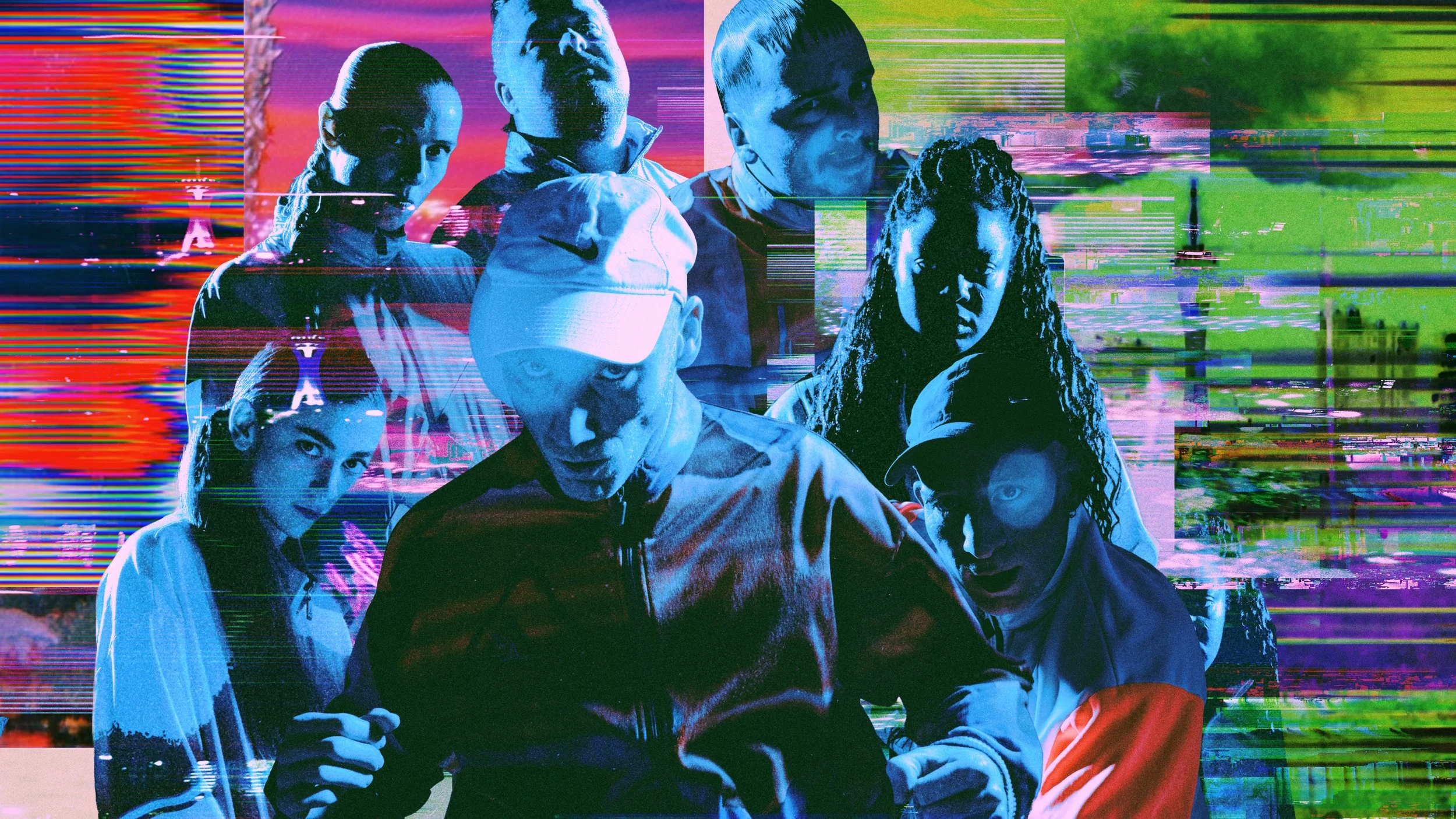
program
program
The
current


EN | What happens when we let go of control? And when do we need boundaries to protect ourselves? What happens when we surrender to music, to movement, to one another?
The Current is a physical and musical journey through a world in constant motion. In an ever-changing landscape of walls, corridors and open spaces, the boundaries between inside and outside, the individual and the collective freedom and control are continuously drawn and redrawn.
The audience moves along, becoming part of a world in which nothing stays the same.
Driven by techno beats, we set out to a search for freedom, trauma and connection. The dance floor becomes a place of resistance against the systems that control and divide us, but also a refuge from the fears and memories that can hold us captive. But they also provide a refuge for those who feel lost or are struggling with their pain.
In an increasingly polarised world, we search for something stable to hold on to. We look for ways of living together without constantly drawing new boundaries. Community can offer protection and belonging, but it can also become suffocating.
The Current explores the tension between the need to belong and the desire to be free. Between resistance and surrender. An intense experience in which dance, live music and text merge allowing the collective energy of the dance floor to create space for vulnerability and transformation.
The Current is also about dance as a form of survival. About finding a way out of the racing mind and back into the body. Pushing the body to exhaustion to silence the thoughts that won’t stop at 4AM. Dancing to survive the panic, to give painful memories a place without letting them take control, and to find a way back to the here and now.
NL | Wat gebeurt er als we de controle loslaten? En wanneer hebben we grenzen nodig om onszelf te beschermen? Wat gebeurt er als we ons overgeven aan muziek, aan beweging, aan elkaar?
The Current is een fysieke en muzikale reis door een wereld die voortdurend in beweging is. In een steeds veranderend landschap van muren, gangen en open ruimtes worden de grenzen tussen binnen en buiten, het individu en het collectief, vrijheid en controle voortdurend getrokken en opnieuw bepaald. Het publiek beweegt mee en wordt onderdeel van een wereld waarin niets hetzelfde blijft.
Op de pulserende beats van techno gaan we op zoek naar vrijheid, een manier om met trauma om te gaan en verbondenheid. De dansvloer wordt een plek van verzet tegen de systemen die ons controleren en verdelen, maar ook een toevluchtsoord voor de angsten en herinneringen die ons gevangen kunnen houden. Een plek voor wie zich verloren voelt of worstelt met pijn.
In een wereld die steeds verder polariseert, zoeken we naar iets om ons aan vast te houden. We zoeken naar manieren om samen te leven zonder voortdurend nieuwe grenzen te trekken. Een gemeenschap kan bescherming en verbondenheid bieden, maar ook verstikkend worden.
The Current onderzoekt de spanning tussen de behoefte om ergens bij te horen en het verlangen om vrij te zijn. Tussen verzet en overgave. Een intense ervaring waarin dans, livemuziek en tekst samensmelten en de collectieve energie van de dansvloer ruimte creëert voor kwetsbaarheid en verandering.
The Current gaat ook over dans als een manier om te overleven. Over ontsnappen aan een hoofd dat maar blijft doordraaien en terugkeren naar je lichaam. Over doordansen tot je niet meer kunt, om de gedachten tot zwijgen te brengen die je om vier uur 's nachts wakker houden. Dansen om de paniek te doorstaan, pijnlijke herinneringen een plek te geven zonder je erdoor te laten beheersen, en een weg terug te vinden naar het hier en nu.
ON TOUR: 29 OCT –– 20 FEB
ON TOUR: 29 OCT –– 20 FEB
Clubbing, collectivity and resistance: Guy & Roni on The Current
With their latest production, The Current, Club Guy & Roni join forces with HIIIT and media artist Boris Acket to explore club and rave culture. What happens when individuals allow themselves to be carried along by a collective current? How much room remains for resistance, freedom and individual conviction? Yvon van Apeldoorn spoke to Guy Weizman and Roni Haver.
Club Guy & Roni previously created Mechanical Ecstasy, a rave performance that featured at Lowlands, among other festivals. The NITE production Nachtwacht also ended with a rave. What is it about club culture that appeals to you?
Guy: “Personally, a great deal! It’s a place where you can be yourself and be together with others. And you can dance — which, of course, is something we’re very passionate about. I look at it through the lens of third place theory: alongside home and work, we need a third place where we can come together freely and as equals. Churches used to fulfil that role, but that’s increasingly disappearing. People are looking for new spaces like that, and society hasn’t yet come up with a good answer. I hope the digital world won’t take on that role. You can be yourself online, but you’re not always the most sociable version of yourself.”Boris Acket was also involved in Bad Nature. Why are you working together again?
Roni: “As artists, we often get stuck in our own ways of thinking. Our company is quite diverse, but even so, we can develop a fairly homogeneous outlook. That’s why we’re constantly seeking out different perspectives by collaborating with artists from other cultures and disciplines. Boris’s perspective on humanity, technology and nature, rooted in visual art, is hugely inspiring to us. He also has a background in club culture. That’s where we found common ground.”You describe rave as a movement of ‘resistance and transcendence’. What do you mean by that?
Guy: “What’s particularly interesting is the tension between those two concepts. Historically, clubs have been safe spaces where subcultures could develop their identities — from gabbers and heavy metal fans to the LGBTQ+ community. This tradition of coming together goes back to ancient rituals. It releases an energy that becomes almost spiritual. But there’s also a danger lurking within that collective experience, something we discovered while making Mechanical Ecstasy: a DJ can lead a crowd into a state of ecstasy, almost like a priest. That gives them enormous power over the masses. The title The Current also makes a subtle reference to Die Welle (The Wave), and to moments in history when people have gone along with the tide when perhaps they should have resisted it.”The production incorporates texts by South African poet Ronelda S. Kamfer. Why did you choose her work?
Roni: “We felt it was important to give a voice to someone from a place where the struggle for resistance is still very much alive. Ronelda’s work is deeply poetic and incredibly powerful in its substance. The texts are performed by the dancers and by actor and singer Sarah Janneh. As MC — Master of Ceremonies — she helps guide the audience through the space and throughout the evening.”The music is composed by Max Frimout and Stanislav Tolkachev. Who are they?
Guy: “Max Frimout is a fantastic young Dutch composer we’ve worked with several times before. He moves effortlessly between electronic and contemporary music. He suggested collaborating with Stanislav Tolkachev. Stanislav fled Ukraine, lives in Berlin and is currently one of the biggest names on Europe’s alternative techno scene.”What happens when you bring rave into the theatre?
Guy: “A lot, I think. Theatre is usually associated with high art. Club culture, on the other hand, is seen as part of nightlife, as entertainment — even though it’s so much more than that. I think there’s something exciting about bringing those worlds together.”Roni: “Of course, we’re not simply putting on a rave. What interests us is the physical and emotional state it creates: the feeling of being swept away by rhythm, sound and light, and the possibility of losing yourself in a collective energy. That’s the journey we want the audience to experience.“Boris Acket’s spatial installation dissolves the boundaries between performer and spectator. The audience’s presence, movements and reactions influence how the evening unfolds. Because the performance is experienced from a 360-degree perspective, it feels different from every position. That also requires a completely different approach to choreography.”The audience will be standing throughout the performance. Will the seats be removed from the auditorium?
Roni: “No, the audience will be standing onstage with us, so the seats can stay where they are. The setup has given us quite a few production headaches; what we wanted to achieve wasn’t straightforward. But it wasn’t impossible either, thanks to our fantastic team. It does mean that capacity is limited — we can’t fit 700 people onstage. So if you want to be there, it’s worth booking your ticket early.”Text: Yvon van Apeldoorn (abridged and edited version)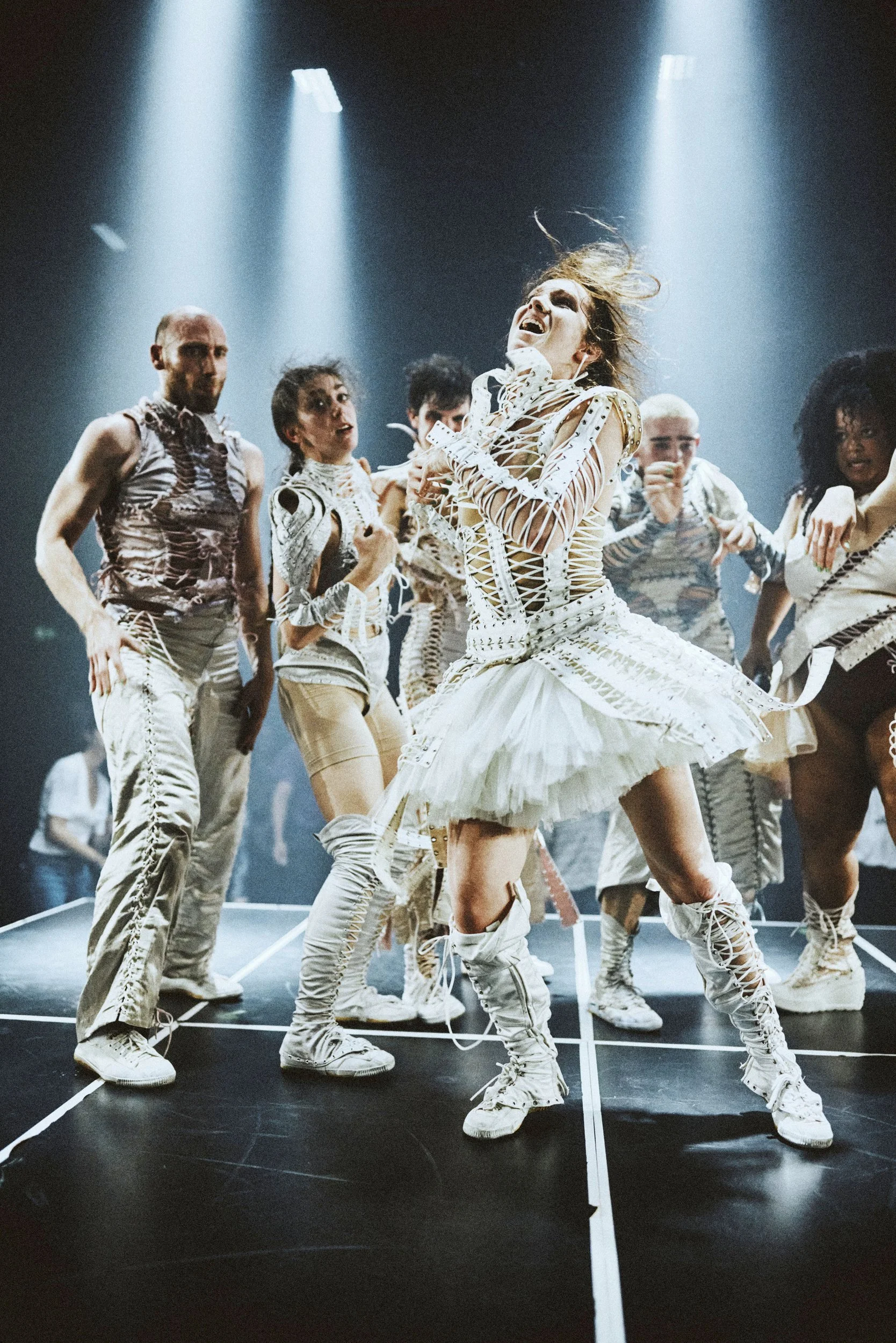
DANCE AS RESISTANCE,
BEATS AS LIBERATION.
A CULTURAL CLASH IN MOTION.
RAW, LOUD, INTENSELY HUMAN.
THIS IS NOT NOSTALGIA;
THIS IS TRANSFORMATION.
A RAVE FOR BODY AND SOUL.
Stay in the current
Want to stay a little longer? Explore the sounds behind The Current with tracks from the show on Spotify, or listen to our Artist Talk podcast, where Guy Weizman takes you behind the scenes of creating the performance.
A little more music, a little more context, a little more Current.
fun facts
fun facts
Gabber means mate/friend. The word comes from Yiddish/Amsterdam street slang and originally meant something like “buddy”
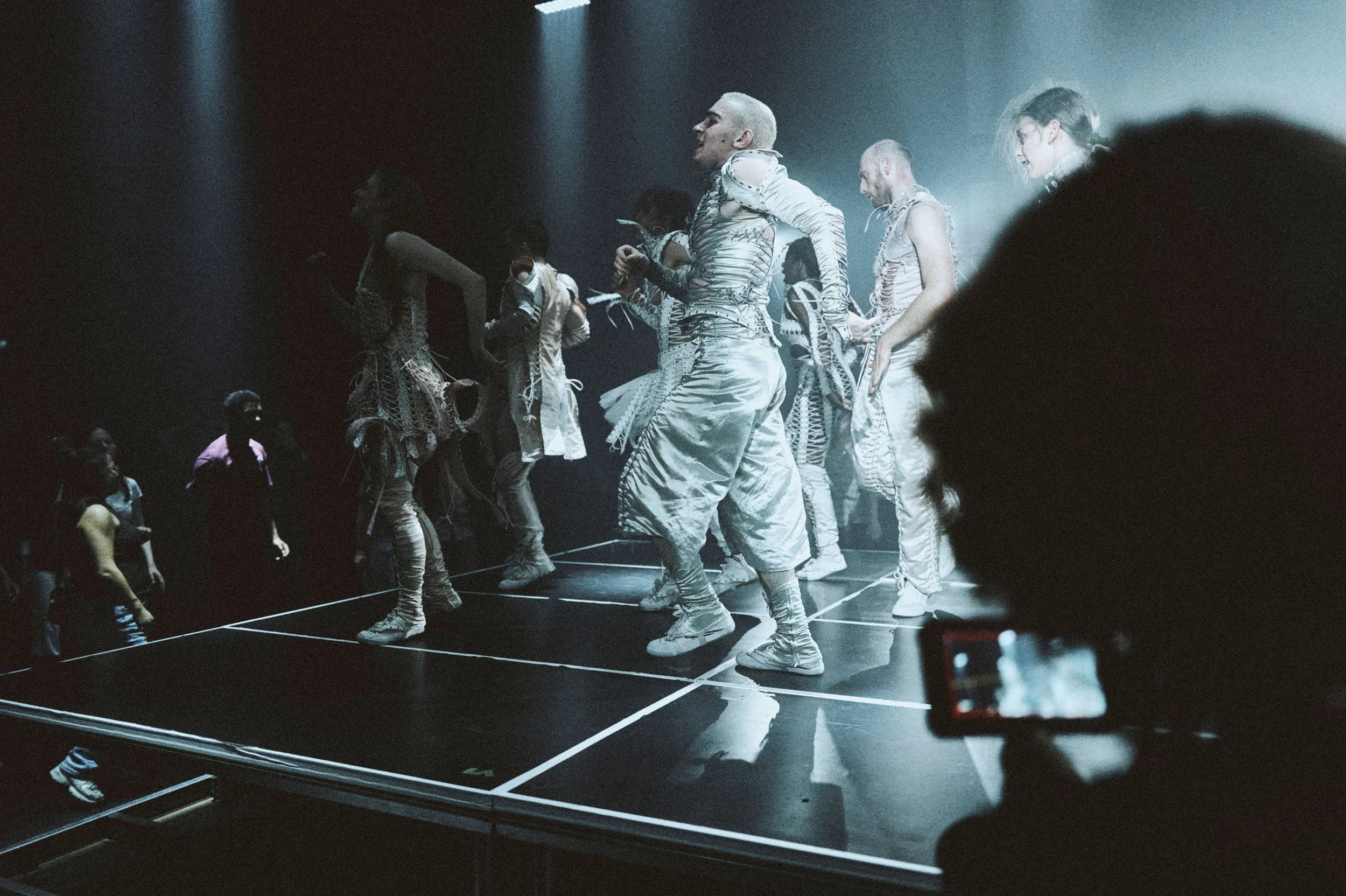
Shaved heads and extremely short undercuts were common in the gabber scene. Although the look could seem intimidating to outsiders, it was also a practical way to stay cool during sweaty, marathon-length raves in cramped warehouses.
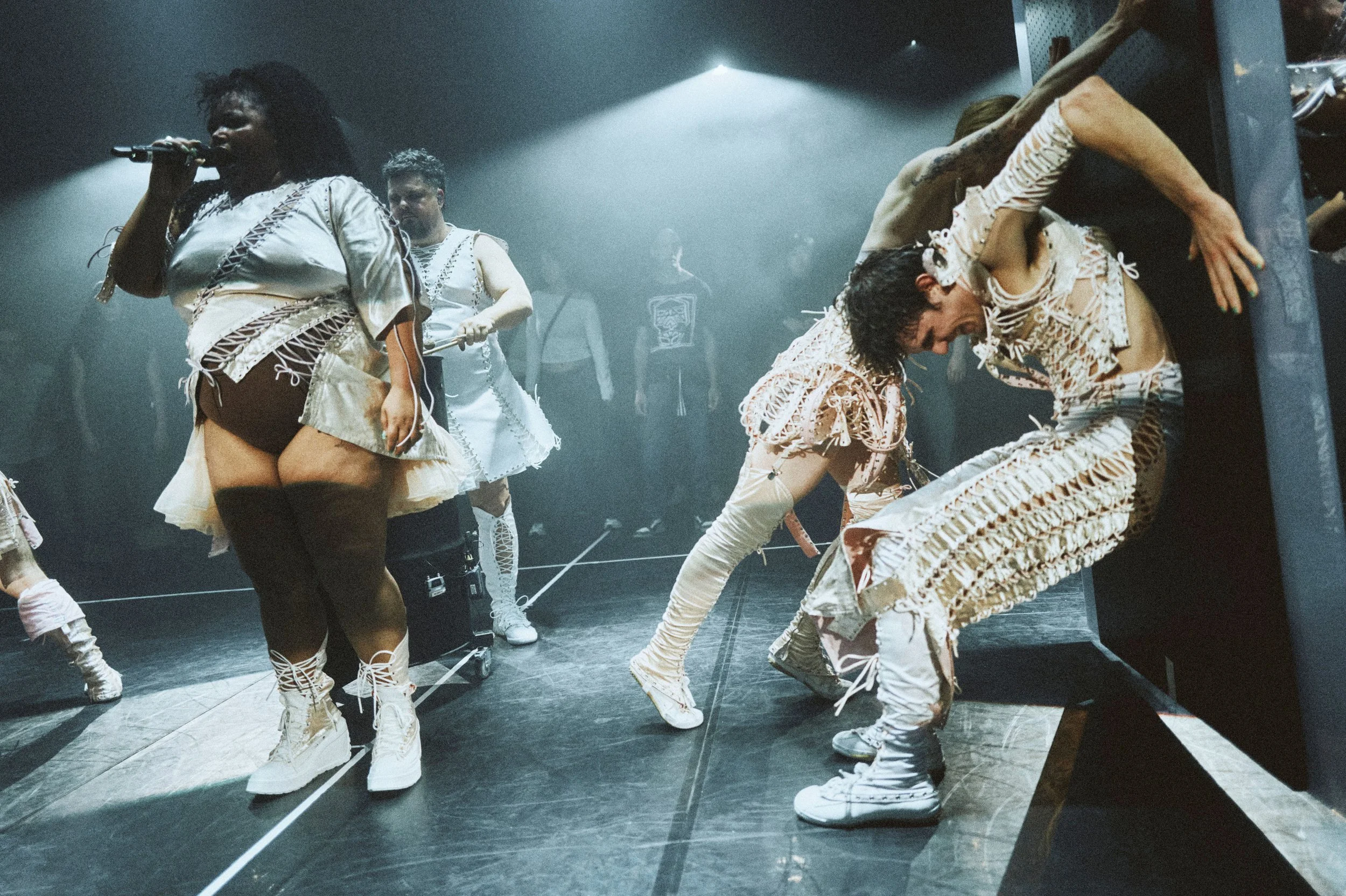
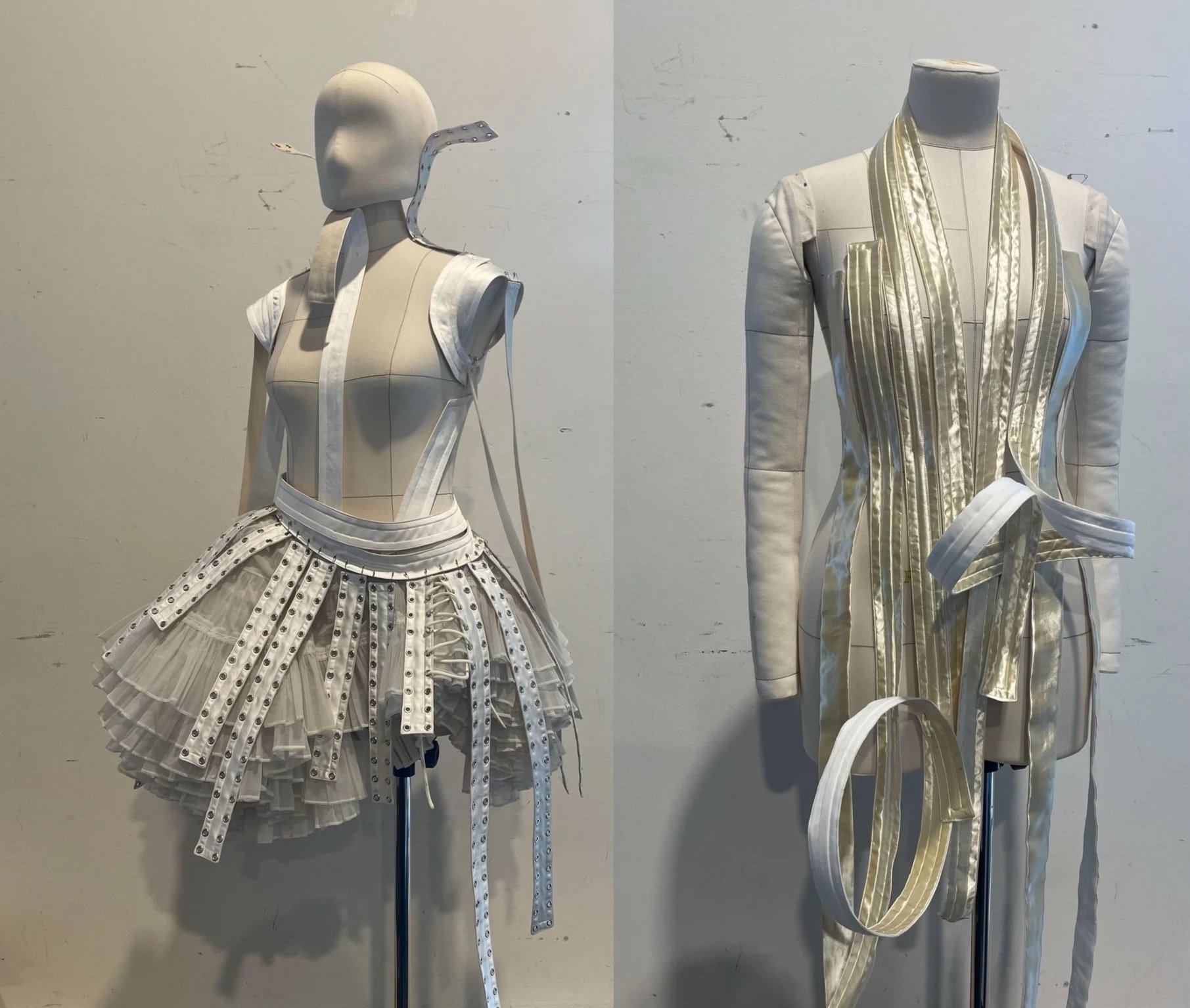
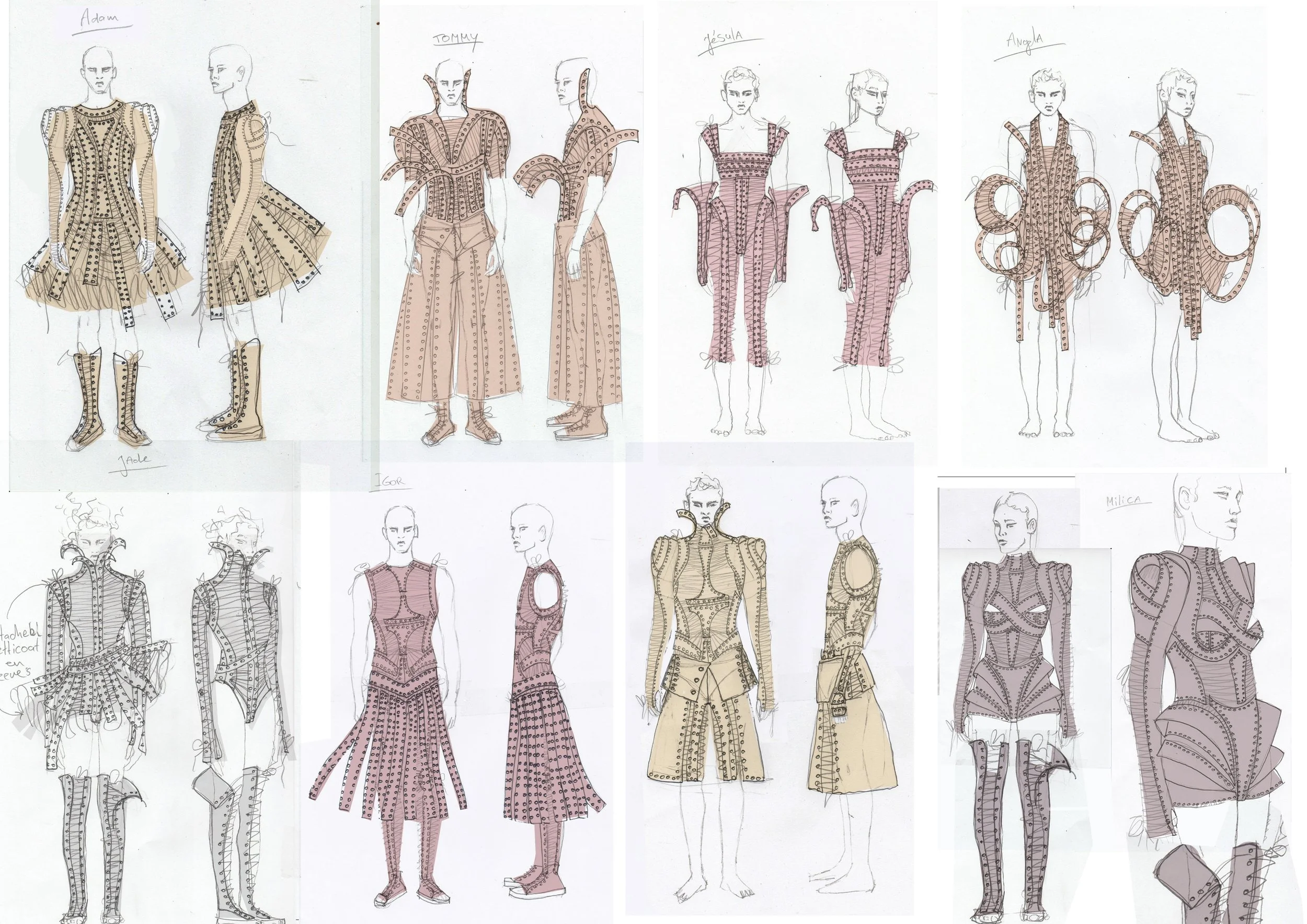
For some of the costumes, more than 3,000 eyelids were individually punched out by hand in the costume atelier and then threaded one by one.
Ronalda S. Kamfer often writes in Kaaps, also known as Cape Afrikaans, a regional variety of Afrikaans characterized by code-switching between Afrikaans and English, as well as by distinctive South African and Cape Town slang.
Max Frimout and Stanislav Tolkachev built a ‘mega sequencer’ – a modular system built solely for generating melodic patterns for the piece.
Boris Acket’s spatial installation consists of 35 panels, with a total weight of 4,444 kg suspended from the grid.
How Much Space Do We Need to Be Ourselves?

We live surrounded by forces competing for our attention, our bodies and our sense of reality. People, systems, memories, fears and desires continuously enter our inner and outer worlds. Some we invite in, others we try to keep out. Some have been with us for so long that we no longer know where they end and we begin.
The Current, by Club Guy & Roni and HIIIT begins with this struggle over space.
The performance moves through a changing architecture of walls, corridors and temporary territories. Borders appear, disappear and are rebuilt. Bodies separate and come together. The audience moves alongside the performers and musicians, negotiating where to stand, when to follow and when to cross a line.
We need borders. They protect us, create intimacy and allow us to decide what we let in. But they can also become instruments of control and exclusion. The Current explores this contradiction: the necessity of borders and the necessity of crossing them.
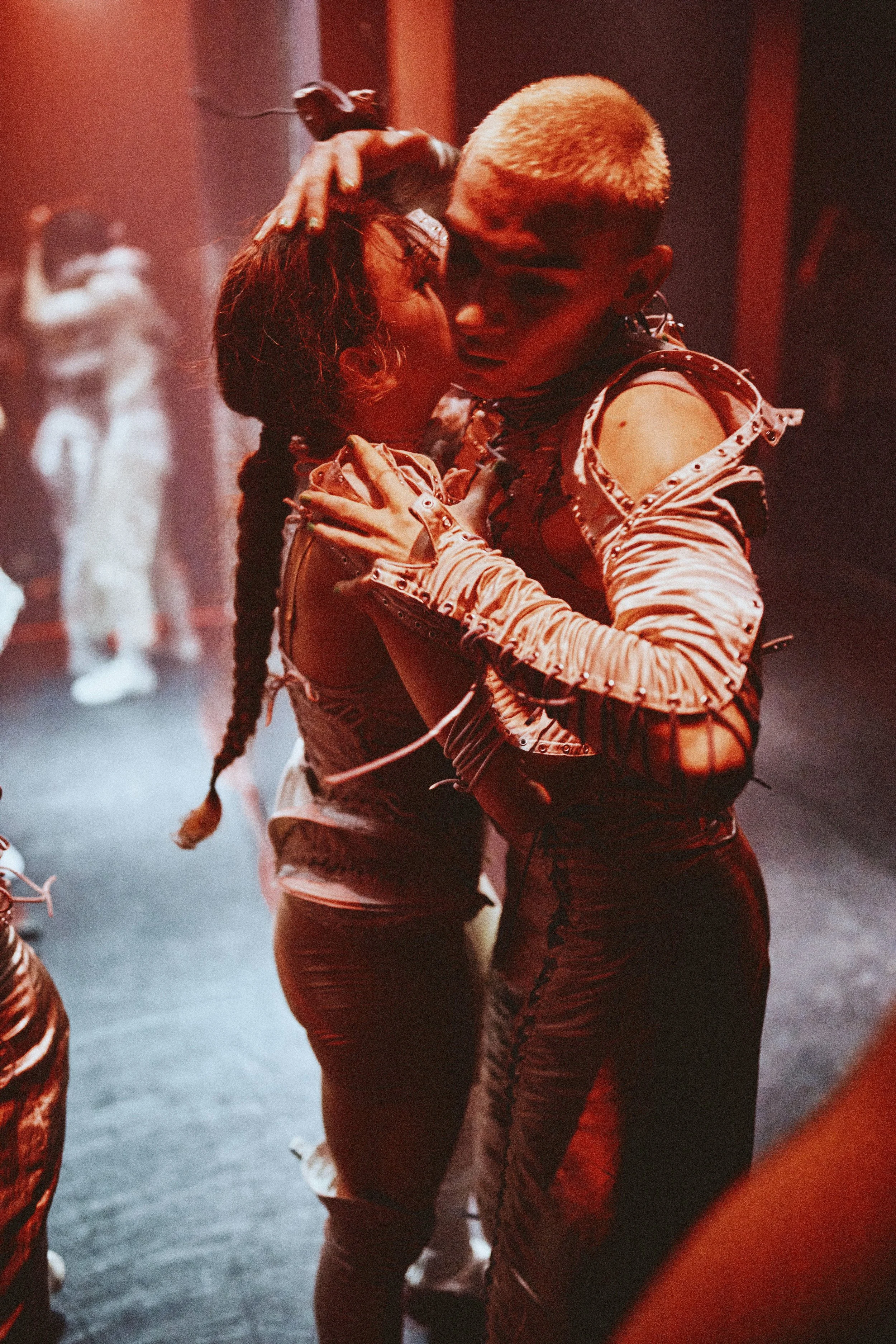
Demanding Space
To demand space is not necessarily to push somebody else away. It can be the insistence on existing fully. Through movement, percussion, electronic sound and physical presence, the bodies in The Current demand to be seen. Dancing becomes a way of saying: see how alive you are.
At other moments, bodies adjust, listen and support each other. The question becomes not simply how much space do I occupy, but how can different perspectives share the same space?
Coming together can itself become an act of resistance. The collective in The Current explores how individual experiences can continue to exist within a group without everyone becoming the same.
Dance as Survival
In The Current, dancing is not only an expression of freedom. It is a physical strategy. When the mind becomes unbearably loud, the body can become somewhere to escape to.
In Roni Haver's choreography, fragmented movements and complex compositions within confined spaces become a demand for visibility and individuality. Electronic music and live percussion push the bodies towards exhaustion. Feet move at incredible speed. Breath accelerates. Until thought has to compete with rhythm, sweat and physical intensity.
Dance becomes a way of returning to the present, surviving the noise and resisting what has become stuck inside the body. A way of giving yourself permission to be loud.
The club becomes a temporary territory created together. Historically, underground club cultures have repeatedly created such spaces. Their resistance was not always expressed through political manifestos. Sometimes gathering itself was an act of resistance.
Hakken: Taking the Ground
The Dutch gabber and hardcore culture of the 1990s provides one of the physical inspirations for The Current. Within this scene, hakken developed as a relentless, stamping response to fast gabber music.
In hakken, the heels attack the ground, claiming the floor again and again. Repetition becomes endurance; endurance becomes surrender. Hundreds of feet striking the same floor create a temporary community through rhythm. The individual enters a collective physical experience without necessarily disappearing into it.
The Inner Current
But borders do not exist only between people. They exist inside us too. A thought can occupy too much space. A memory can take over the present. Fear can become so loud that it begins to determine reality. Trauma can fragment the self into disconnected versions of ourselves.
The texts by South African writer Ronelda S. Kamfer enter this internal landscape through a fragmented figure trying to reconstruct what happened after a night at a club. She encounters different versions of herself and memories that refuse to form a coherent narrative.
Guy Weizman's texts approach the same territory from another direction: the relentless current of thoughts produced by trauma and the exhausting desire to silence them.
The aim is not to erase these fragments, but to find a place for them. Like in trauma therapy, where painful memories are gradually processed so they no longer continuously control the present, The Current searches for integration.
The wound remains part of you, but it does not have to prevent you from moving. The memory remains, but it does not have to determine reality.
The Current of Sound
Sound becomes another architecture in The Current. The music by Max Frimout and Stanislav Tolkachev does not simply accompany movement; it creates the conditions in which bodies move.
Frimout's practice grows out of sonology, modular synthesis and spatial sound, exploring the relationship between sound, movement and space. Tolkachev comes from the Ukrainian underground techno scene, developing a distinctive language of unstable rhythms, atonal structures, industrial textures and psychedelic repetition.
Together they create a musical world shifting between structure and instability. Rhythms repeat without completely settling. Sounds accumulate, distort and collide. A pulse becomes pressure; chaos suddenly becomes collective rhythm.
Live percussion by HIIIT adds another physical layer. Rhythm is produced not only by machines but by bodies playing instruments in the same space as the dancers and audience. Sound, percussion, architecture and movement become one system.
Architecture That Refuses to Stay Still
Boris Acket extends this negotiation into light and architecture. His installation is not a background but behaves like another body. A central mind.
Walls move. Corridors appear. Spaces compress and open again. Light determines what becomes visible and what disappears. A safe space can become restrictive; an obstacle can become protection.
The audience cannot observe these transformations from a fixed position. They must continuously relocate themselves. There is no final arrangement. Borders have to be negotiated again and again.
A Space Large Enough
The Current does not present freedom as the absence of borders. Boundaries can offer safety and control, but they can also restrict us. Throughout the performance, they are created, crossed, rebuilt and eventually become impossible to control.
The same process takes place internally. Fragmented memories and different versions of the self are not resolved by disappearing. Instead, the movement is towards integration: allowing these experiences to remain part of us without continuously determining the present.
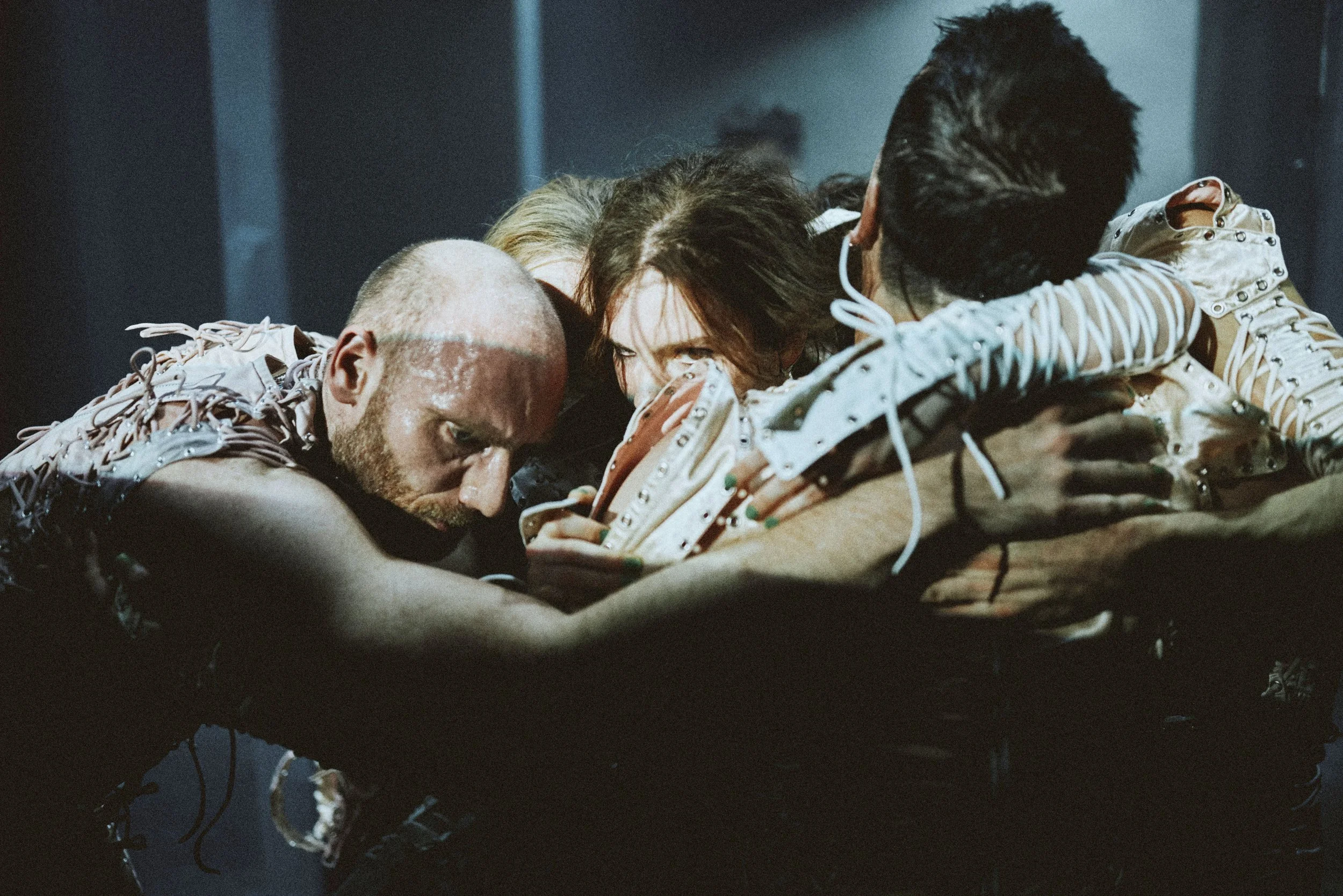
The collective plays a role in this process. Bodies separate, collide, protect, support and reorganise around one another. Individual experiences do not disappear within the group, but neither do they remain entirely private.
The final movement towards exhaustion, surrender and release follows a long process of resistance. Freedom in The Current is not a stable condition, but a temporary state that emerges through control, fragmentation, pain and physical exhaustion.
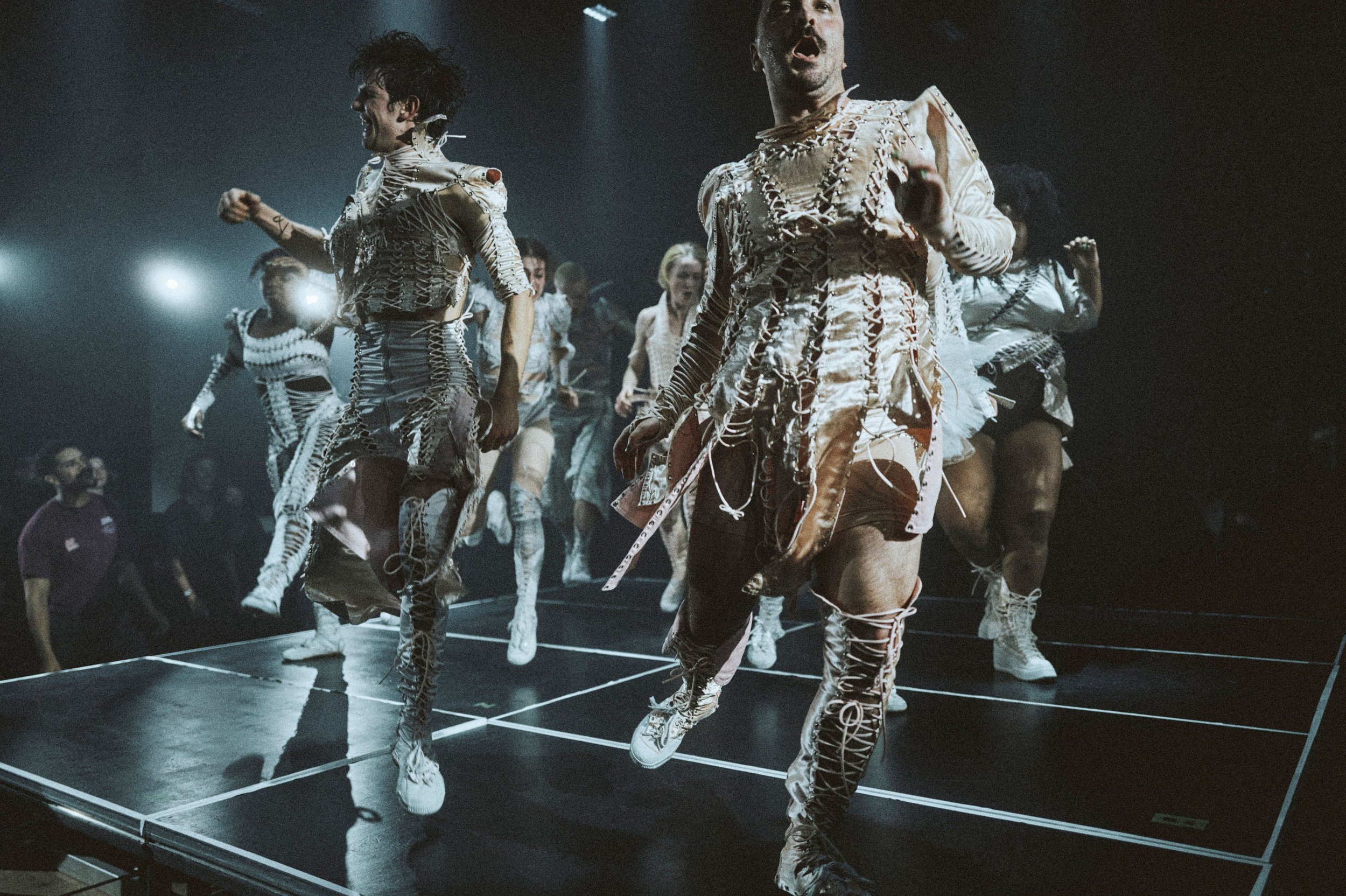
“My soul avoids annihilation
So I dance to reclaim the square meter beneath my boots
this floor is not theirs.Resistance is not always a brick through a window
you stand on their line. you dance on it.
you stomp until the line dissolves into dust.”
— Ronelda S. Kamfer
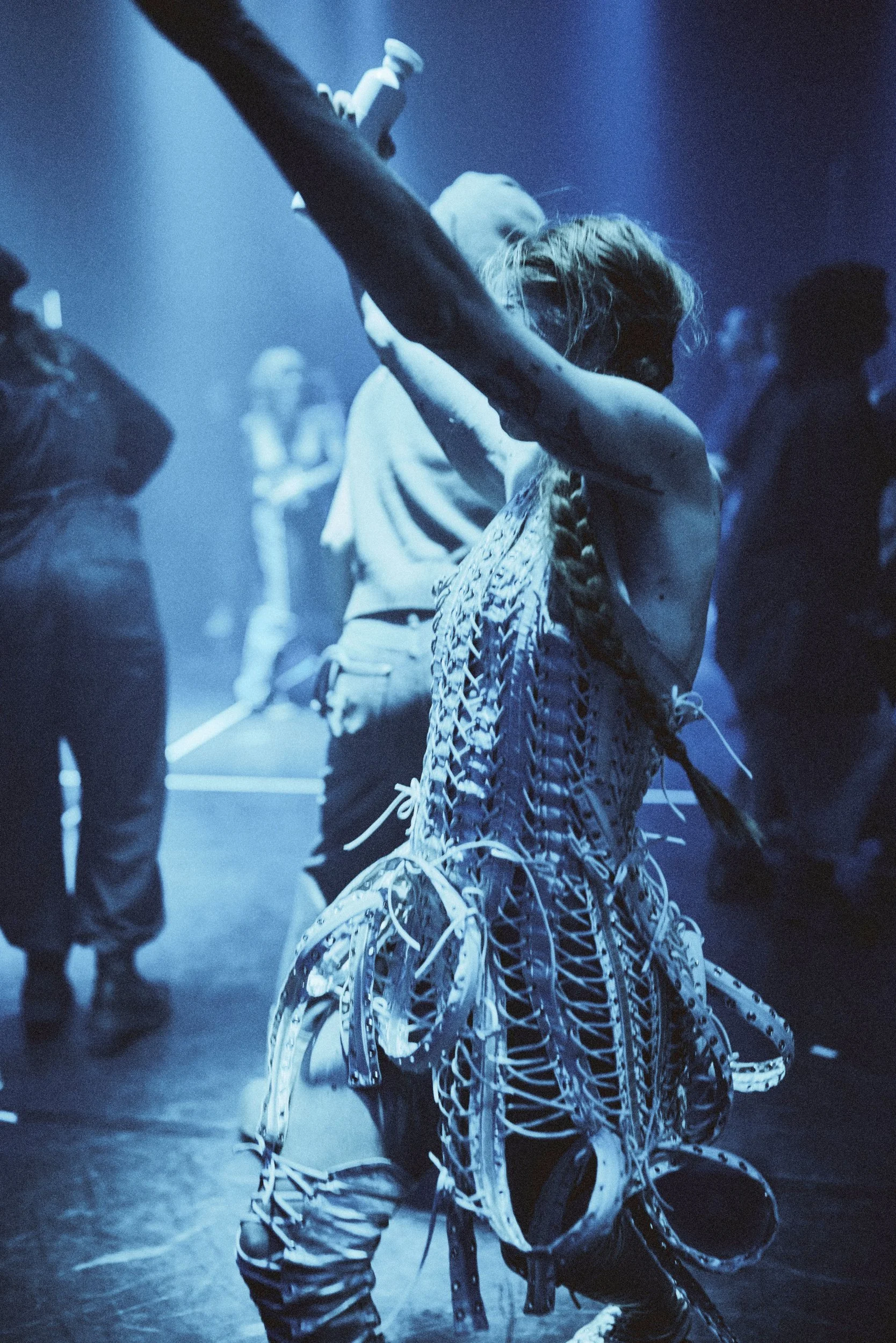
“Feeling trapped by what holds me, yet finding comfort in what keeps me close.”
–– Benji Nijenhuis, costume designer The Current
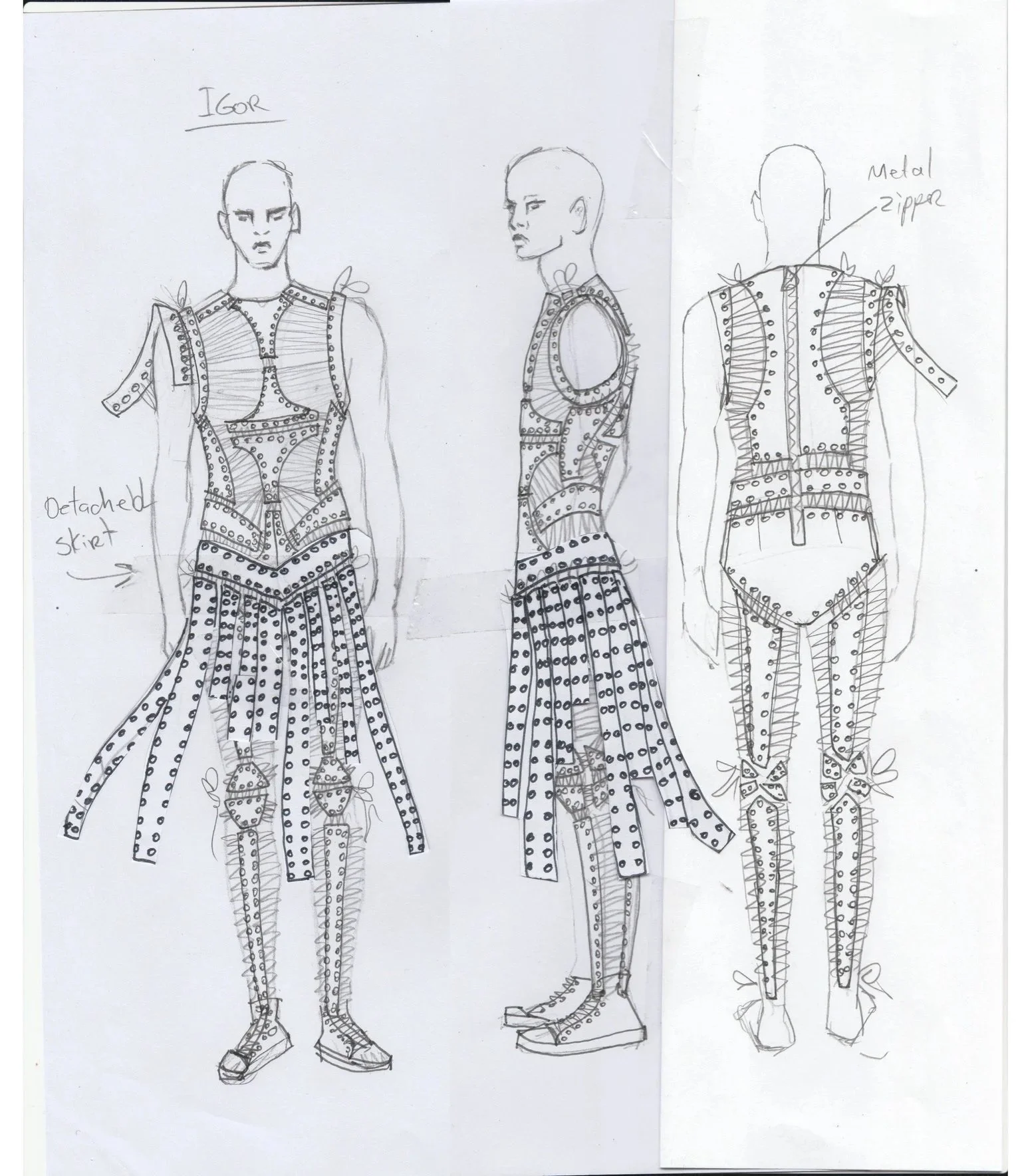
“The costume are
a symbol of connection where restriction and comfort
become one.”
Stay in touch!
DID The current MOVE YOU, SHAKE YOU OR CHANGE YOUR MIND? WE'D LOVE TO HEAR FROM YOU!
Stand together
The Current explores what happens when we move together — and what happens when the world pulls us apart.
That’s why we’re supporting Slachtofferhulp Nederland, an organisation that offers emotional, practical and legal support to victims of crime, accidents and other traumatic events.
We’re making a donation, and we invite you to join us. Every contribution helps people find support when they need it most.
Stand with those who need support. Donate to Slachtofferhulp Nederland.

-
![]()
Adam Peterson
-
![]()
Angela Herenda
-
![]()
Igor Podsiadly
-
![]()
Jade Gourdon
-
![]()
Jésula Toussaint Visser
-
![]()
Lucio Volcov
-
![]()
Milica BAJČETIĆ
-
![]()
Sarah Janneh
-
![]()
Tommy Heeffer
-
![Max Frimout]()
Max Frimout
-
![]()
Niels Meliefste
-
![]()
Stanislav Tolkachev


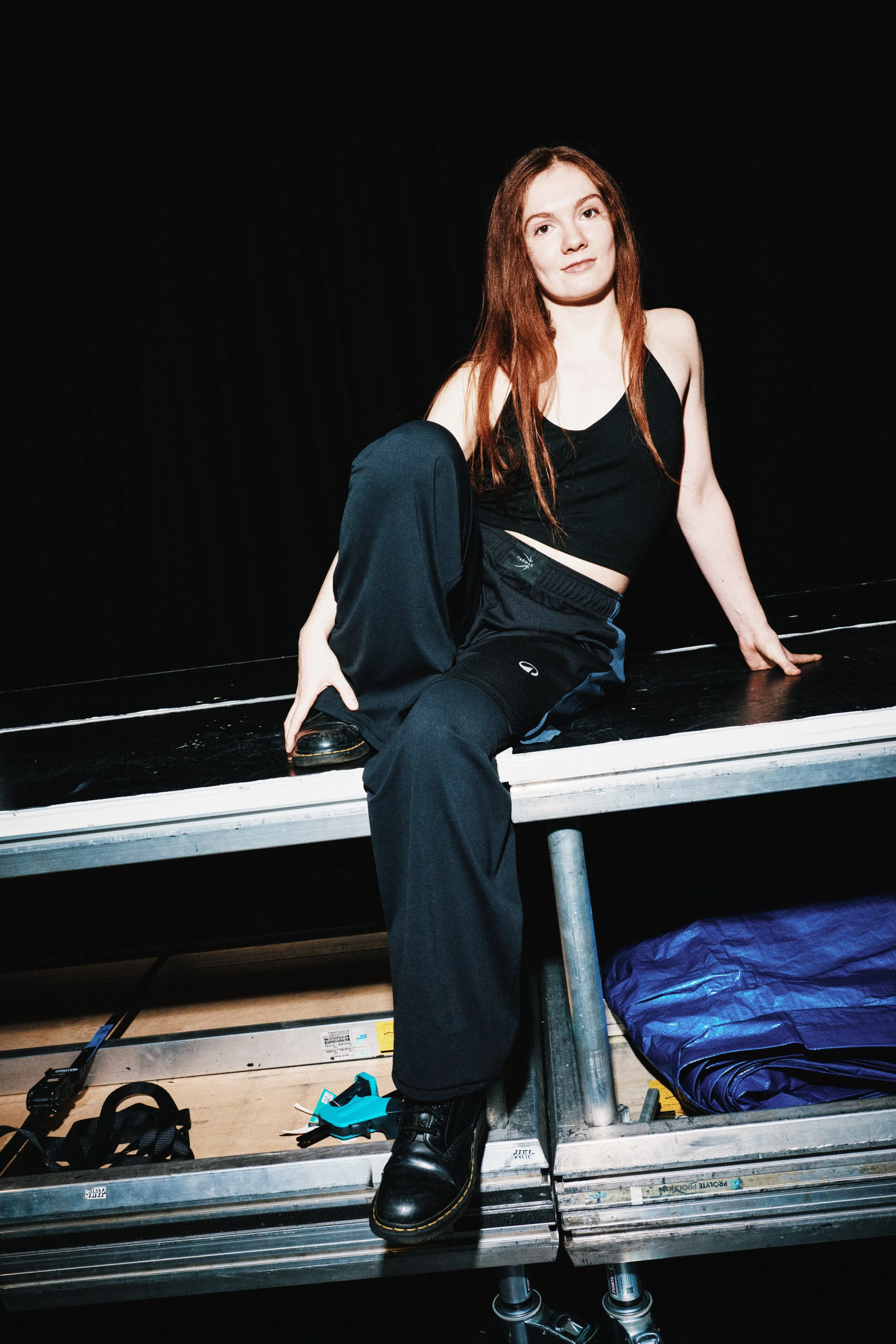


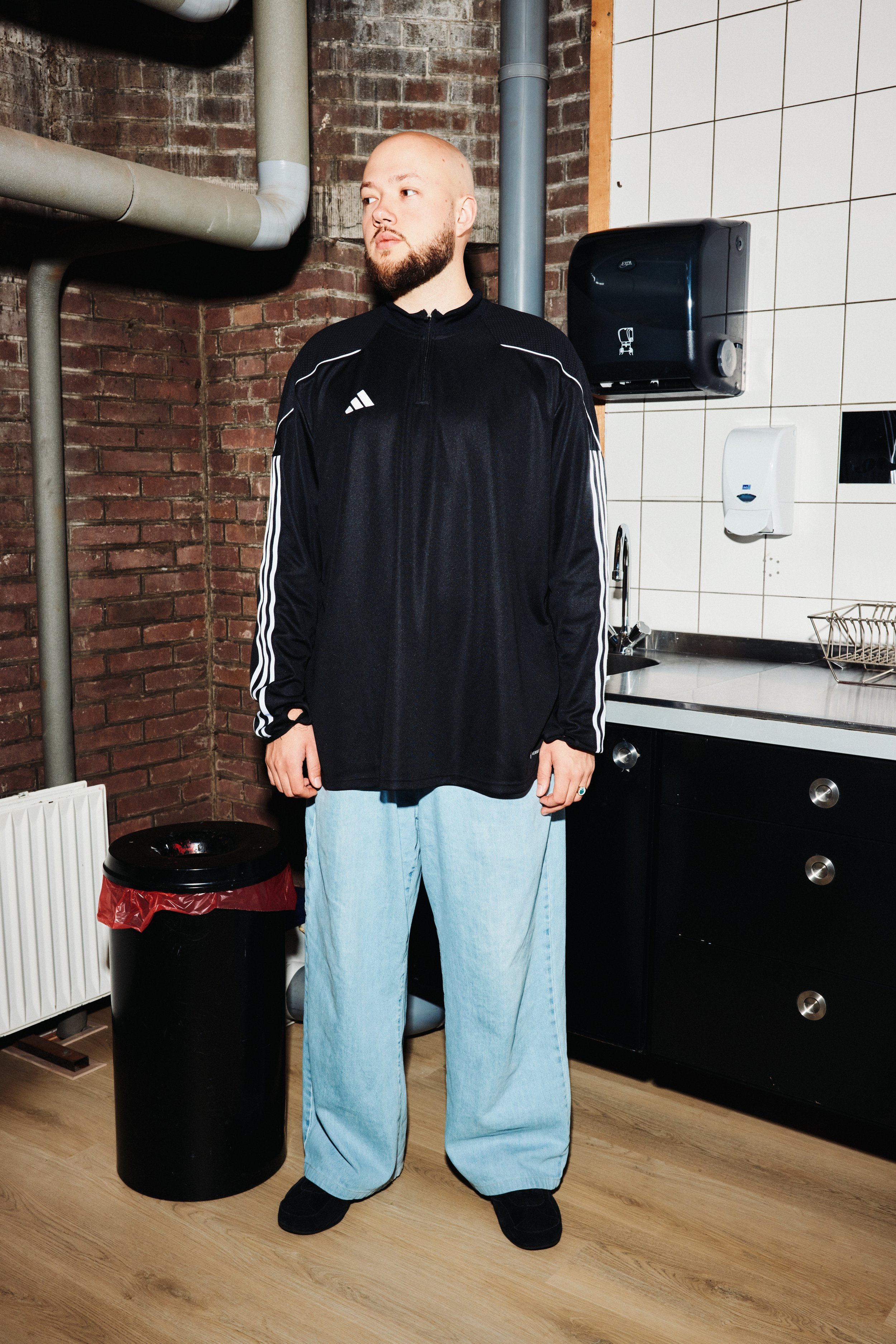
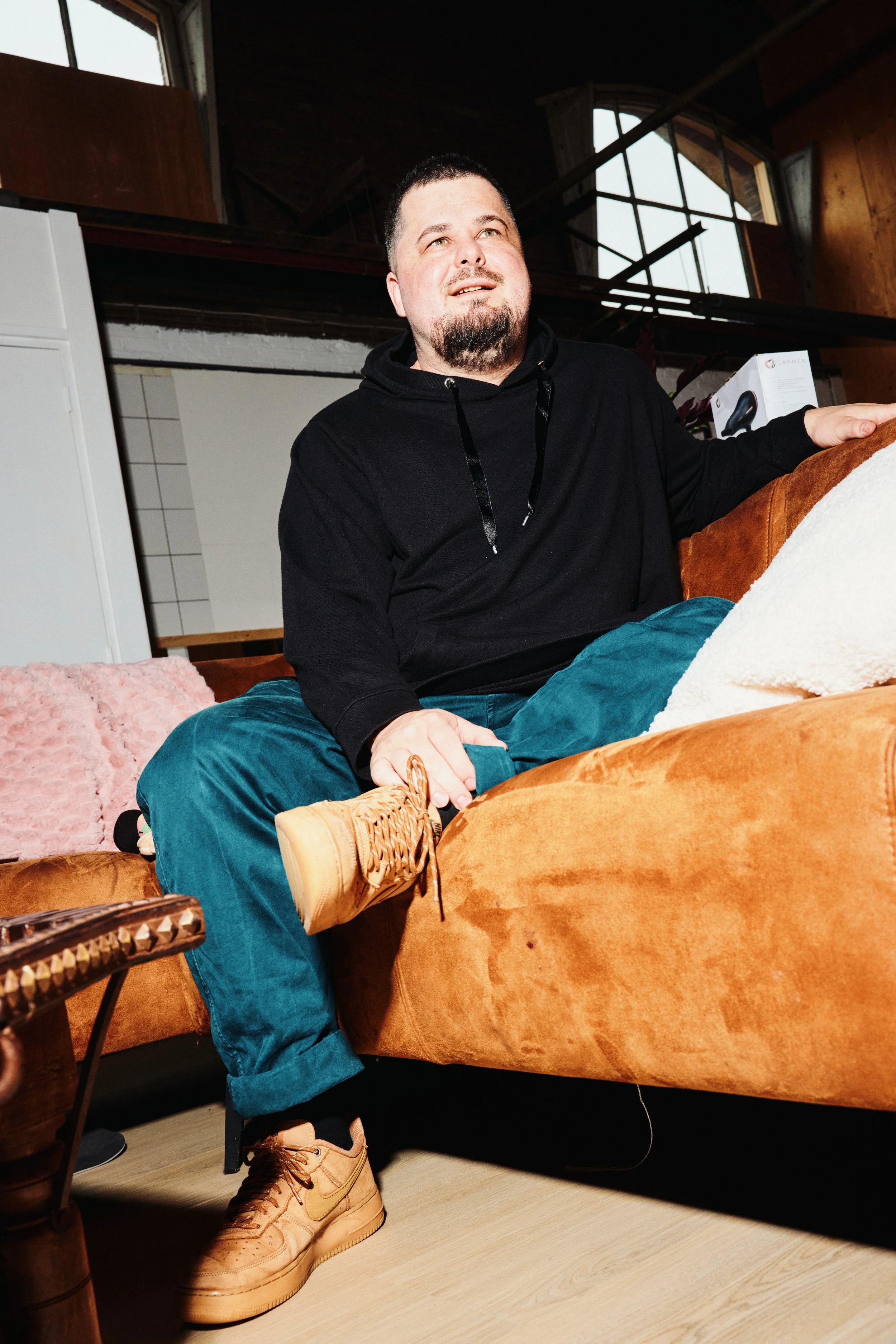
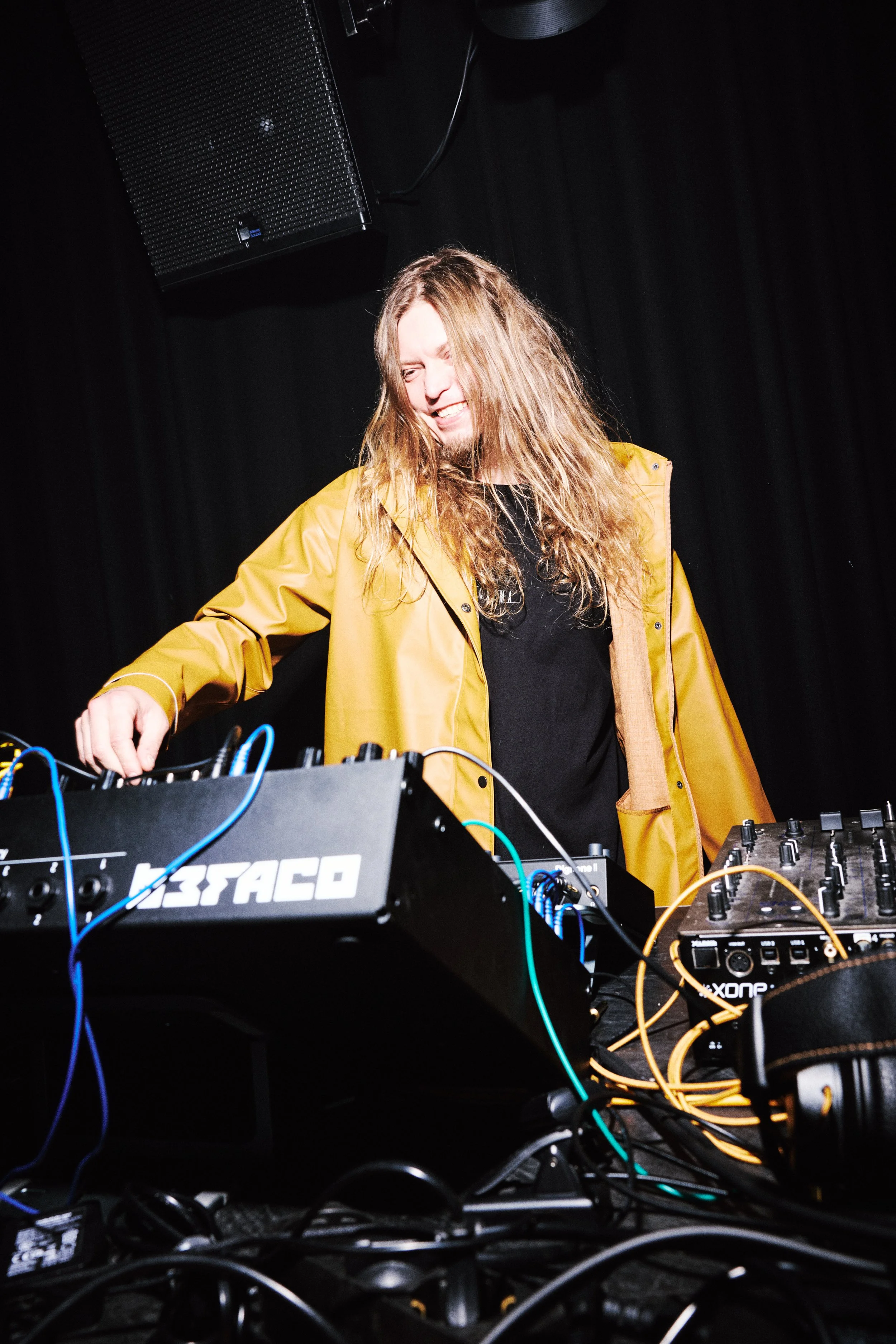
CONCEPT: Roni Haver & Guy Weizman
CHOREOGRAPHY: Roni Haver (in collaboration with the dancers)
FINAL EDIT: Guy Weizman
COMPOSITION: Max Frimout & Stanislav Tolkachev (in collaboration with Niels Meliefste)
TEXT: Guy Weizman, Ronelda S. Kamfer
SET DESIGNER: Boris Acket
COSTUME DESIGNER: Benji Nijenhuis
LIGHTING DESIGN: Boris Acket, Martijn van Nunen
SOUND DESIGN: Peter Zwart
DRAMATURGY/TEXT ADAPTATION: Friederike Schubert, Murat Dikenci
MUSICAL DRAMATURGY: Frank Wienk
DIRECTOR'S ASSISTANT: Murat Dikenci
PRODUCTION MANAGER: Floortje Halters
TECHNICAL PRODUCTION: Martijn van Nunen, Siemen van der Werf
LIGHTING OPERATOR: Nick Dunsbergen
CAST: Adam Peterson, Angela Herenda, Milica Bajčetić, Jade Gourdon, Tommy Heeffer, Sarah Janneh, Igor Podsiadly, Jésula Toussaint Visser, Lucio Volcov
MUSICIANS: Niels Meliefste, Max Frimout, Stanislav Tolkachev
TECHNICAL CREW: Jan Alfers van Koot (set), Aron Huisman (stage manager), Nick Dunsbergen (lighting), Martijn van Nunen (lighting installation), Peter Zwart (sound), Dagmar van Iersel (intern)
DRESSER: Esther Rada
TOUR MANAGER: Sascha de Jong
MARKETING: Ashley Leidelmeyer, Carina De Becker, Marieke van Toledo, Michèl Nijdam, Victoria Mastenbroek.
PR: Janine Fluyt
EDUCATION: Rosie Reith, Renske van Oosterhout, Sietske Kleine Schaars, Anne Peters, Jikki Ribberink
INTERNATIONAL RELATIONS: Wim de Vries
COSTUME DEPARTMENT: Tania Ballve, Helga Richter, Marloes Dadswell, Sophie-Marie Ordo, Joana Carvalho, Amy Bürger (intern)
COSTUME DEPARTMENT VOLUNTEERS: Margaret Tholen, Tom Eijkelenkamp, Olga Retamero, Jeanine Homan, Anouk Koole
SCENIC CONSTRUCTION: Grand Theatre Decoratelier, Douwe Ket, Louwe Noordhoff, Ingrid Zijlstra (intern)
NITE HOSTS: Elianne Drogt, Manouk Venekamp, Megan de Kruijf, Nynke Stam, Claire Vrijenhoek, Noa Brokelman
ACQUISITION & TOUR PLANNING NL: Bureau Berbee & Jansen
SPECIAL THANKS TO: Halie, Miguel Restituyo, Oostblok, Team Club Guy & Roni, Team HIIIT
DURATION: 1h10 (current running time)
For national enquires and touring options please contact Harmen van der Hoek – harmen@nite.nl
For international enquires and touring options please contact Wim de Vries - wim@nite.nl